

Every year we look back at the trends and events that shaped the investment landscape. Here’s what we saw in 2025.
It was a year dominated by AI, tariffs, easing inflation and the rise of gold. As we started the year, many were anticipating a recession. Instead, markets delivered something more complex: slower growth but surprising resilience.
To make sense of the year, we sat down with Wayne Wachell, Genus’ Executive Chair Person and Chief Investment Officer, and Stephanie Tsui, Genus’ Chief Sustainability Officer. Together, they offered their perspectives on the trends that defined the year: from AI’s expanding influence, to challenging macroeconomic forces and a shifting regulatory environment for ESG.
2025’s dominant market themes

AI: If there was a single force that defined markets this year, it was artificial intelligence, says Wachell. Mega-cap technology companies led the charge, with capital concentrating heavily in a small group of dominant players such as Nvidia, Microsoft and Alphabet, which are commonly referenced in discussions of AI-related market concentration.
As the year progressed, however, investors increasingly focused on which companies could translate AI investment into sustainable earnings. “We’re starting to see a sort of splitting among the competition – versus everything going to Nvidia,” Wachell added.
Macroeconomic forces: Beyond AI, macroeconomic developments continued to exert a strong influence on markets. Tariffs created volatility, especially in the first half of the year. Central bank policy also played a key role, as the U.S. Federal Reserve, along with other major central banks, began a gradual easing cycle on interest rates. Inflation continued to moderate over the course of the year, but it did not disappear as a policy concern.
Record-high gold prices: Gold delivered one of its strongest performances in years. The asset benefited from a combination of factors: lingering inflation concerns, ongoing geopolitical uncertainty and growing attention on the U.S. government’s debt levels. For many investors, gold served its traditional role as a hedge against macro and policy risk.
Some sectors thrived while others fell behind

Technology was among the stronger-performing sectors during the year, supported by sustained investment in AI and the infrastructure supporting its expansion. Mega-cap platforms benefited from strong earnings momentum and continued capital inflows, reinforcing technology’s outsized influence on overall market performance.
Communications-related equities also performed well, supported by rising demand for data, connectivity and digital services. As AI adoption accelerated, these businesses benefited from increased usage and their role in supporting the broader digital ecosystem.
Gold companies were another standout, buoyed by strong gold prices. Gold equities reflected movements in the underlying metal and were used by some investors as part of broader diversification strategies.
Several traditionally defensive sectors lagged for much of the year, though many showed signs of recovery toward year-end. This included real estate, which continued to feel the effects of higher interest rates, consumer staples which underperformed amid tariff-related uncertainty, and health care, thanks to regulatory uncertainty and U.S. government policy concerns..
A regulatory shift for sustainability and ESG
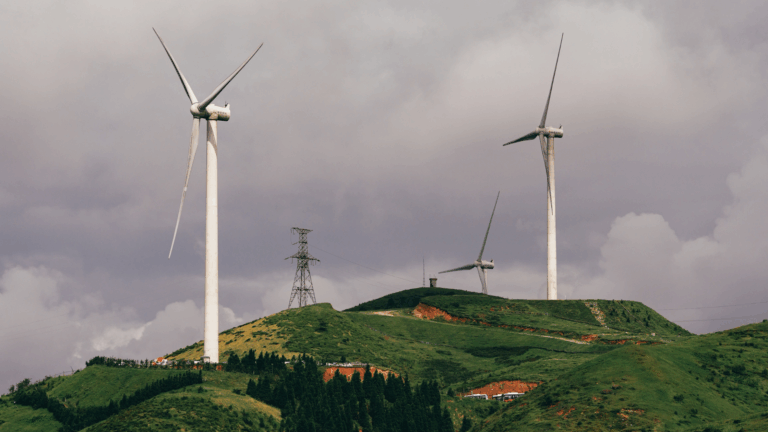
This year also marked a clear shift in the regulatory landscape around sustainability and ESG.
In Canada, the introduction of Bill C-59 was intended to combat greenwashing and improve the transparency and accountability of environmental claims. Instead, it caused many organizations to scale back public sustainability disclosures rather than risk missteps – an effect referred to as greenhushing. “We have seen a lot more companies just stop reporting on their sustainability progress,” Tsui says.
Fortunately, this didn’t stop impact investors from holding strong to their values, and while some funds experienced outflows, it was not a fundamental reversal. “Clients are staying committed,” Tsui says. “Some are taking a more cautious approach to putting new capital into the space, while others are actually doubling down,” she adds.
For many institutions, sustainability has increasingly been framed through the lens of strategic value and long-term resilience. And as priorities shifted, capital gravitated toward areas addressing real-world problems, Tsui says, “such as renewable energy, health care and even nature-based solutions.”
AI’s double-edged sword: Productivity vs. energy demand
Few developments this year illustrated both opportunity and tension as clearly as the rapid advancement of AI. On one hand, AI has delivered meaningful productivity gains, particularly in analytical, research-intensive and administrative tasks. In fields such as finance, law and other forms of knowledge work, processes that once took days or weeks can now be completed in minutes.
At the same time, AI’s growth has come with a significant cost: energy demand.
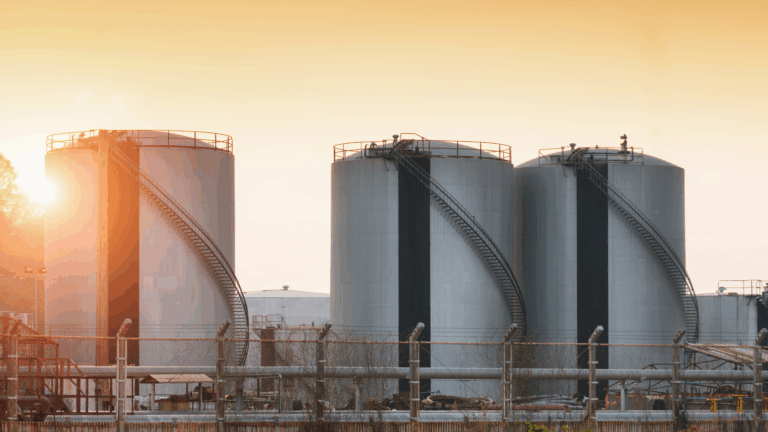
The rapid buildout of data centres and computing infrastructure has driven a surge in electricity consumption, increasing reliance on all available energy sources – particularly natural gas, coal and other carbon-intensive fuels. “They’re building data centres and energy production facilities faster than you can imagine right now,” Wachell says.
As a result, decarbonization timelines are being pushed out, and energy security considerations are increasingly shaping policy and investment decisions. “The whole race for AI has pushed out the lifespan of hydro-carbons,” Wachell says. “We were supposed to see peak demand in 2030; now that’s been pushed back to 2050.”
In the future, AI may become part of the solution. Advances in forecasting, grid optimization, energy storage management and efficiency modeling have the potential to improve how renewable energy is integrated and scaled. For now, AI remains both a catalyst for progress and a source of constraint – accelerating productivity while simultaneously challenging the path to a more sustainable energy future. And it’s likely to be a dominant theme for many years to come.
Looking for an in-depth review of 2025, and a look at our predictions for 2026? Register now to attend our upcoming webinar on January 22. You can join us in person or via livestream.
References
- Ghosh, I. (2025, April 17). Tariffs to trigger sharp US economic slowdown, chance of recession jumps to 45%: Reuters Poll. Reuters. Retrieved December 19, 2025, from https://www.reuters.com/markets/us/tariffs-trigger-sharp-us-economic-slowdown-chance-recession-jumps-45-2025-04-17/
- Randall, S. (2025, December 2). Canada holds steady amid trade uncertainty as BlackRock flags global AI-driven market shift. Wealth Professional. https://www.wealthprofessional.ca/news/industry-news/canada-holds-steady-amid-trade-uncertainty-as-blackrock-flags-global-ai-driven-market-shift/391022
- TRADING ECONOMICS. (n.d.). United States Fed funds interest rate. https://tradingeconomics.com/united-states/interest-rate
- FinancialContent. (2025, November 25). Gold’s Unprecedented Ascent: A Deep Dive into Economic and Geopolitical Drivers. FinancialContent. https://markets.financialcontent.com/stocks/article/marketminute-2025-11-25-golds-unprecedented-ascent-a-deep-dive-into-economic-and-geopolitical-drivers
- Commerce, C. C. O. (2025, February 26). A failure of process and policy: Canada’s Greenwashing Amendment to the Competition Act in Bill C-59 – Canadian Chamber of Commerce. Canadian Chamber of Commerce. https://chamber.ca/greenwashing-bill-c59/
- Bradstock, F. (2025, November 22). Why the IEA Now Thinks Oil Demand Will Keep Rising Until 2050. OilPrice.com. https://oilprice.com/Energy/Energy-General/Why-the-IEA-Now-Thinks-Oil-Demand-Will-Keep-Rising-Until-2050.html#:~:text=The%20IEA%20reversed%20its%20earlier,years%20longer%20than%20previously%20anticipated.
This document is provided for general information purposes only and is not a substitute for professional advice. It does not constitute investment, legal, accounting, tax, or other advice or recommendations, nor should it be relied upon as the basis for any decision. Readers should seek specific professional guidance before making financial” or investment decisions. Certain information herein is based on third-party sources believed to be reliable, but its accuracy and completeness are not guaranteed. Past performance is not a guarantee of future results.